intaqt
Advanced training in transactional analysis
"Transactional analysis is a theory of human personality (...) that aims to foster both the development and the change of personality."
ITAA definition
Academy
Your path with transactional analysis at intaqt
From initial orientation to a recognized qualification – in clear steps you can take year by year, module by module.

Step 1
Introductory course (101)
An overview of the key concepts of transactional analysis. The 101 certificate is the prerequisite for a TA training program.
Upcoming dates
Step 2
Basic training
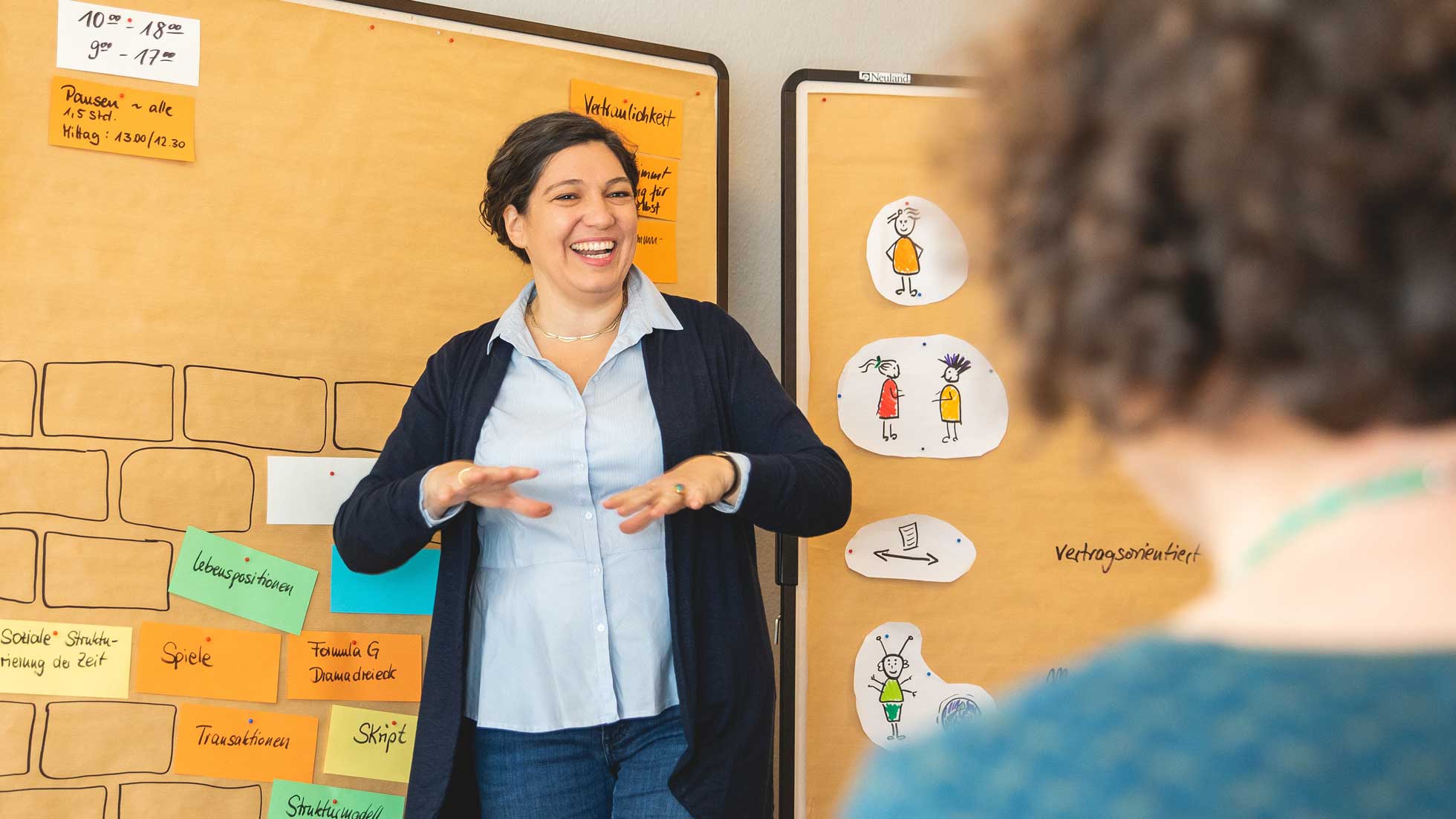
Typically three years in a training group (bookable year by year). The focus is on personal development and analytical skills – counseling, leading, coaching.
Trainer
With Jule Endruweit
With Thomas Wehrs

Step 3
Masterclass & more
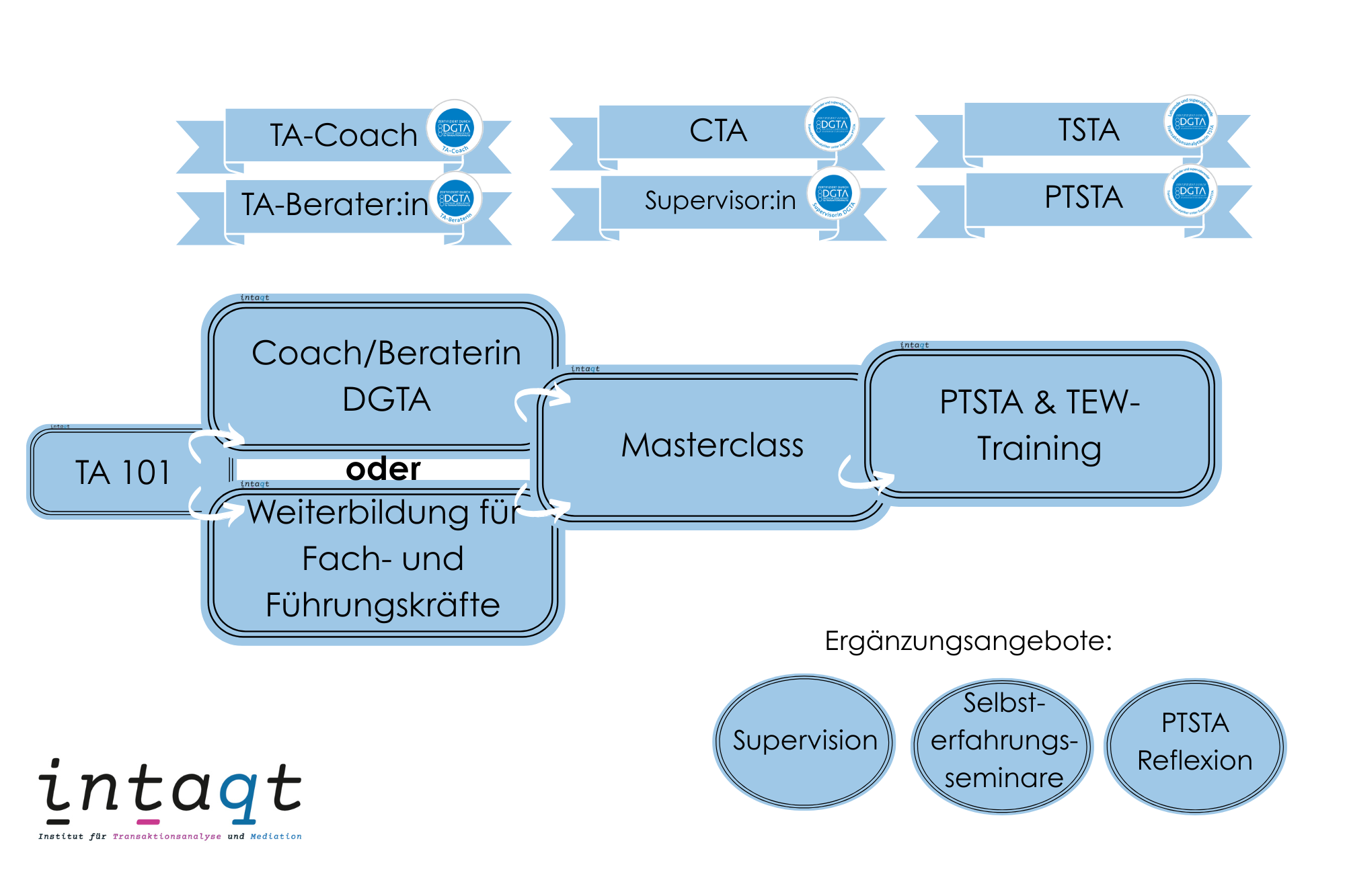
Advanced qualifications and recognized credentials – e.g. Supervisor, Certified Transactional Analyst (CTA), Teaching and Supervising Transactional Analyst (P)TSTA.
Upcoming dates
04.12.2026 - 05.12.2026
Professional Level – TA-Masterclass bis zur CTA-Prüfung
05.12.2026 - 06.12.2026
Professional Level – TA-Masterclass bis zur CTA-Prüfung
Still unsure which step is right for you?
In a free initial consultation, we'll clarify the best options for your goals.
Orientation
Transactional analysis – briefly explained
What is transactional analysis?
Transactional analysis (TA) was developed by Eric Berne in the 1950s and has been continuously refined ever since. The goal is autonomy – being in constructive relationship with other people. A t its core, it revolves around three questions: What's happening inside me? What's happening between us? And how can I consciously act differently?
- Models of script and ego states explain what's happening inside me and why. The goal of the analysis is a conscious redecision.
- Communication and relationship dynamics can be analyzed through transactions, OK positions, or psychological game dynamics (the Drama Triangle), with the aim of opening up new options.
- Autonomy, strokes, and symbiosis describe ways in which fulfilling relationships can succeed – both professionally and personally.
- Modern TA now integrates knowledge from related disciplines – such as systems theory, developmental psychology, attachment research, or neuroscience. This keeps it not only current, but also professionally connected.
What does the training offer you?
- a qualification recognized by national and international associations – optional.
- Relationships in resonance: At work and in your personal life, you'll recognize underlying patterns and learn to communicate openly and clearly at eye level – for greater resonance.
- More clarity about yourself: You'll recognize your own patterns and be able to change them deliberately.
- Better communication: Through clear models, you'll understand why conversations succeed or escalate, and develop options to navigate them with confidence.
- Professional competence: Whether in leadership, consulting, coaching, or education: TA is a practical toolkit for your everyday work.
- Personal growth: You'll develop greater autonomy, self-confidence, and freedom of action.
- Tools and methods for your everyday leadership, consulting, coaching, or organizational development work.
All modules count toward a DGTA/EATA/ITAA qualification
Who is it suitable for?
You work as…
- a person in a leadership role, project manager, or Scrum Master,
- a teacher, trainer, or in a guiding role,
- an HR professional / HR manager,
- an internal consultant, conflict manager, trainer, or coach,
- the chair of a representative body,
- a freelance coach, supervisor, mediator, or consultant
… and want to develop and professionalize further in your role.
The prerequisite is that you also want to grow personally, because transactional analysis is more than just concepts, tools, and methods. Rather, transactional analysis is built on personal attitude – that's what makes it so effective.
The starting point is always the 101 introductory course.
Button
If you've already completed a recognized 101 course, sign up to begin the Foundational Training.
Procedure
How does the continuing education work?
Personal development is central, alongside analytical and reflective skills. Both grow through engagement with transactional analysis concepts – in the group and in practice.
You book one year in a training group at a time and decide anew after each year.
- Transactional Analysis Counselor – after approximately three years in a training group, a written paper, and a colloquium.
- Transactional Analysis Coach – after approximately three years in a training group, a written paper, and a colloquium.
- DGTA Supervisor – after at least four years of TA training, a written paper, and an oral exam.
- Certified Transactional Analyst (CTA) – after at least five years of training groups, a written paper, and an oral EATA exam.
In addition
Additional formats
For your professional development

Coaching & Supervision
In coaching or supervision you will find time, space, confidentiality and the support to reflect on your situation from the level above the problem.
TA Supervision
An overview of the key concepts of transactional analysis. The 101 certificate is the prerequisite for a TA training program.

Training for effective leadership
…so good colleagues become good managers! Our training program for people with personnel responsibility and those who want to take it on.

Self-awareness
Individual modules and formats for self-exploration – even without completing the full training path.
WHO WE ARE
Trainer Team

Jule Endruweit
TSTA Organization
Foundational Training, Masterclass, PTSTA Training, Supervision

Thomas Wehrs
PTSTA Organization
Foundational Training, Masterclass, Supervision

Gerlinde Ziemendorff
TSTA Education
Masterclass, Script Seminar: Colors of Life

Maya Bentele
TSTA Organization and Counseling
PTSTA Training

Amrei Störmer-Schuppner
TSTA Psychotherapy
Self-exploration: Body Image Constellation

Almut Schmale-Riedel
TSTA Psychotherapy and Counseling
Self-exploration: Script Seminar
Still unsure which step is right for you?
In a free initial consultation, we'll clarify the best options for your goals.
Impulse
Transactional analysis explained
FAQ
Frequently asked questions
Quick answers about transactional analysis training at intaqt.
What is transactional analysis?
Transactional analysis (TA) was developed by Eric Berne in the 1950s and has been continuously refined ever since. The goal is autonomy – being in constructive relationship with other people.
At its core, it revolves around three questions: What's happening inside me? What's happening between us? And how can I consciously act differently?
Models of script and ego states, transactions, OK positions, and psychological games help you understand patterns and develop new options – both professionally and personally.
Who is the training suitable for?
These programs are aimed at people who want to develop and professionalize in their role – for example:
- executives, project managers, or Scrum Masters
- teachers, trainers, or people in a guiding role
- HR professionals / HR managers
- internal consultants, conflict managers, trainers, or coaches
- chairs of representative bodies
- freelance coaches, supervisors, mediators, or consultants
What is the 101 introductory course – and do I need it?
The introductory course (101) provides an overview of the key concepts of transactional analysis. The 101 certificate is the prerequisite for a TA training program. It's the starting point if you don't yet have a recognized 101 qualification and want to begin the Foundational Training or other advanced paths.
How does the Foundational Training work?
The Foundational Training typically takes place over three years in a training group. You book one year at a time and decide anew each time. The focus is on personal development and analytical skills – counseling, leading, coaching.
At intaqt, the groups are led by, among others, Jule Endruweit (TSTA Organization) and Thomas Wehrs (PTSTA Organization).
What qualifications are possible?
All modules count toward a DGTA/EATA qualification. Typical paths include:
- Transactional Analysis Counselor – after approximately three years in a training group and a written paper
- Transactional Analysis Coach – after approximately three years in a training group and a written paper
- Certified Transactional Analyst (CTA) – after at least five years of training groups, a written paper, and an oral EATA exam
In addition, the Masterclass and other formats lead to qualifications such as Supervisor or Teaching and Supervising Transactional Analyst ((P)TSTA).
What's the difference between the Foundational Training, Masterclass, and other formats?
Foundational Training – a multi-year path in a fixed training group: personal development and analytical competence as the foundation.
Masterclass & CTA path – advanced qualification leading to a recognized exam (e.g. CTA) and Professional Level.
Additional formats – deepening and specialization, e.g. online group supervision, self-exploration, portfolio review, or PTSTA training for teaching. Many formats can also be booked without completing the full training path.
Can I book individual modules or self-exploration formats without the full training?
Yes. Self-exploration formats and other modules (e.g. portfolio review, group supervision) can be attended without completing the full training path. Recognized DGTA/EATA qualifications have their own credit and training requirements – in an initial consultation, we'll clarify what makes sense for your goal.
How do I find out which step is right for me?
If you're unsure what the right next step into transactional analysis is for you, or whether our offerings are right for you: In a free initial consultation, we'll clarify the best options for your goals.
If you'd like to find out more in advance: You'll find dates and formats on the Academy page, on the specific TA page in the Academy dropdown menu, or under Dates.